Home / Safety

The reason someone's mother lets them get in the car.

Crime is the real competitor in this market. Every one of these is in the product, switched on, not a line in a policy document.

Before the trip

Nobody drives for you until we know who they are.

Identity checked against an ID

A selfie matched to an identity document — through Smile ID where we have it configured, or through your own review queue where we do not. Duplicate ID numbers are flagged so one person cannot run three driver accounts.
Police clearance required

A required document everywhere, chased before it expires like any other. You decide what else you want to see.

Unverified means unusable

A driver who has not passed cannot go online, cannot be dispatched, cannot accept a trip, cannot win a bid and cannot be assigned one by your controller. There is no path around it.

Riders too, if you want it

Some operators verify riders as well — for corporate accounts, for late-night work, or after an incident. It is yours to switch on.

During the trip

Five things happening while the car is moving

A PIN before the trip starts

The rider holds a PIN the driver never sees. No PIN, no trip — which means the person getting into the car is the person who booked it, and the car is the one that was sent. Five wrong tries and it locks.

Speed warnings, then fines

You set the policy. The driver gets a banner and a chime while they are still only speeding. Sustained speeding reported by both phones becomes a warning, and then a fine off their prepaid credit — which you can waive or refund. A report from a rider's phone alone is never fined.

Encrypted trip recordings

Audio, and cabin photos where you enable them, uploaded in encrypted pieces and kept for thirty days before being destroyed. Your staff can open a recording only for a trip with a complaint or an SOS, every access is logged, and nobody at your company can delete one early.

Someone is watching the trip

Every minute, the system looks for a long stop, a car well off its route, or a driver's phone that has gone dark. Any of those raises an alert for your control room and asks the rider in the app whether they are OK. “I need help” becomes an SOS.

The phone must be visible

Trips where the driver's phone was covered, or where recording never started, are flagged for you to look at — because the trips somebody wants unrecorded are the ones worth checking.

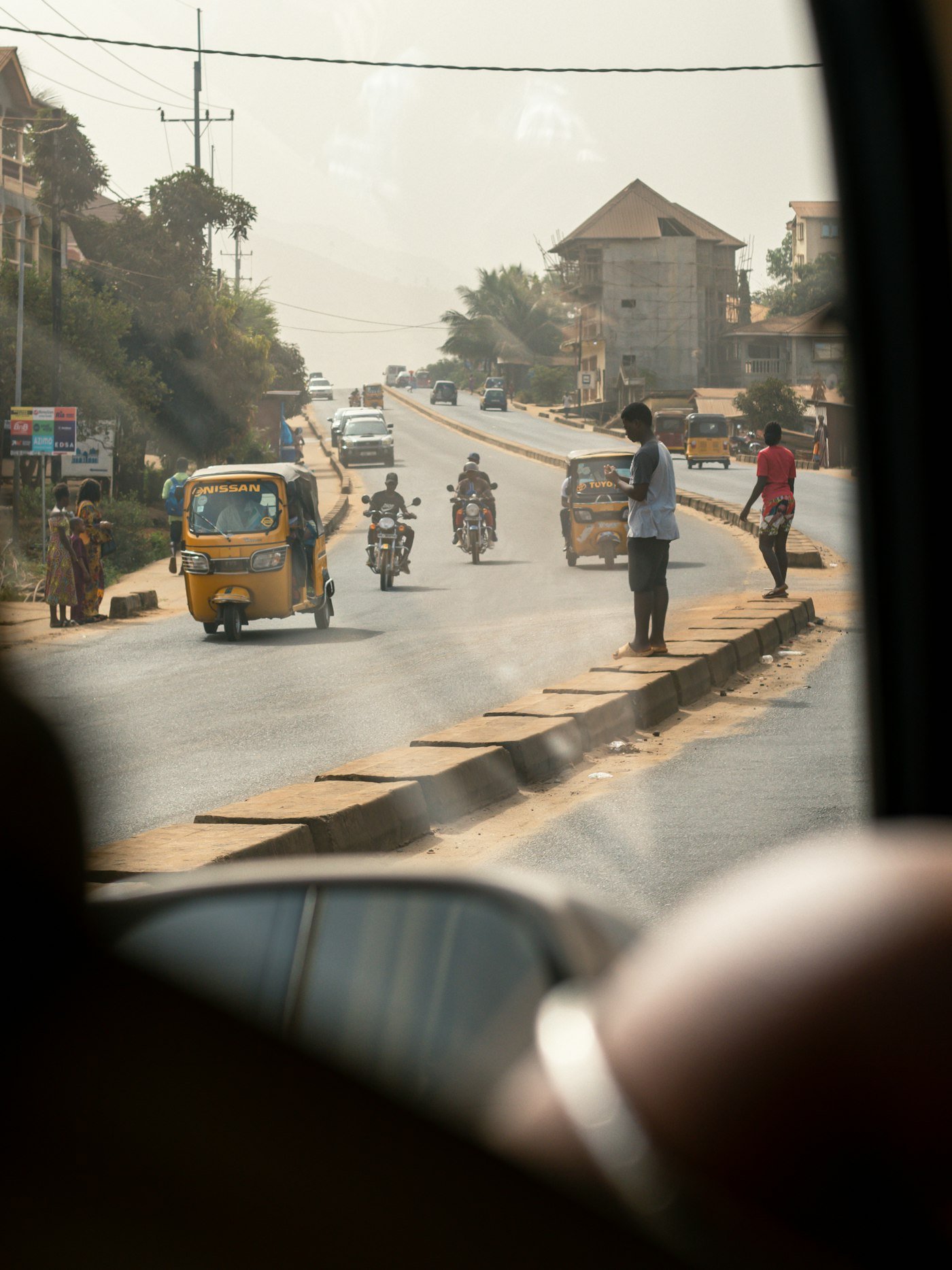
Motorcycles and cars at a busy African intersection
Privacy

Safety that does not become surveillance.

The same tools that protect a rider could be turned on them. So they are fenced.

  • Riders and drivers see each other's phone number only while their trip is live, and never an email address or an IP
  • The map riders watch reads from a feed with no names, numbers or number plates on it — just a moving dot
  • A trip, its chat and its recording are reachable only by the two people on it and, with a reason, by you
  • Driver documents and ID photos are private files behind short-lived signed links, never public URLs
  • Every operator's data is walled off from every other operator's
Money and fraud

The quiet losses, flagged for you to judge

Five patterns raise a flag on a review page. Nothing is ever acted on automatically — a wrong guess takes away somebody's income, so a person decides.

Trips that never moved

A completed trip that charged money but covered almost no distance in almost no time.

Impossible jumps

A trip starting further from the last drop-off than any car could have driven in the time.

Faked GPS

The driver's own phone reporting that its location is being spoofed.

Cancellation abuse

A driver accepting and then cancelling trips all day to game incentives or dodge jobs.

Many accounts, one phone

Several rider accounts created from the same device or connection in a week, hunting first-trip promos.

Promo abuse

Codes that only work inside their own dates, with per-rider limits and a discount ceiling.

Data protection

What the law expects of you, already built.

POPIA in South Africa, the Data Protection Act in Kenya, the NDPA in Nigeria and the Google Play rules all want the same things. They are in the product rather than on your to-do list.

Delete my account

From inside both apps and from a public page anyone can use without the app — which Google Play now requires of every app that has sign-up.

A copy of my data

Riders and drivers can download everything you hold about them, delivered as a file on a link that expires.

Deletion that is real

The account is switched off at once; after a short grace period the name, number, email, photos, ID check, documents, cards and saved places are erased. Your trip and payment records stay in your books without them.

A word about recordings and the law. Recording people in a vehicle is regulated, and the rules differ by country. The product gives riders and drivers notice and keeps recordings locked and short-lived, but you should have your own lawyer read your notice wording before you switch recording on.

Safety is the product, not a feature of it.

Start free and see every one of these working in your own account.